The science on gut health is no longer fringe. Fermented foods — those transformed by live bacteria, yeasts, or moulds — have moved from niche health stores into mainstream nutritional guidance, and Lisbon's food culture turns out to be unusually well positioned for anyone trying to eat their way to a healthier microbiome.
The timing matters. European interest in functional foods has accelerated sharply since the European Food Safety Authority updated its prebiotic and probiotic guidance frameworks in 2024, pushing gut health further up the public conversation. Meanwhile, Portuguese diets already include several traditionally fermented staples that many residents eat without ever thinking of them as gut-friendly. The trick is knowing what you are looking for and where to find the more intentional, high-quality versions.
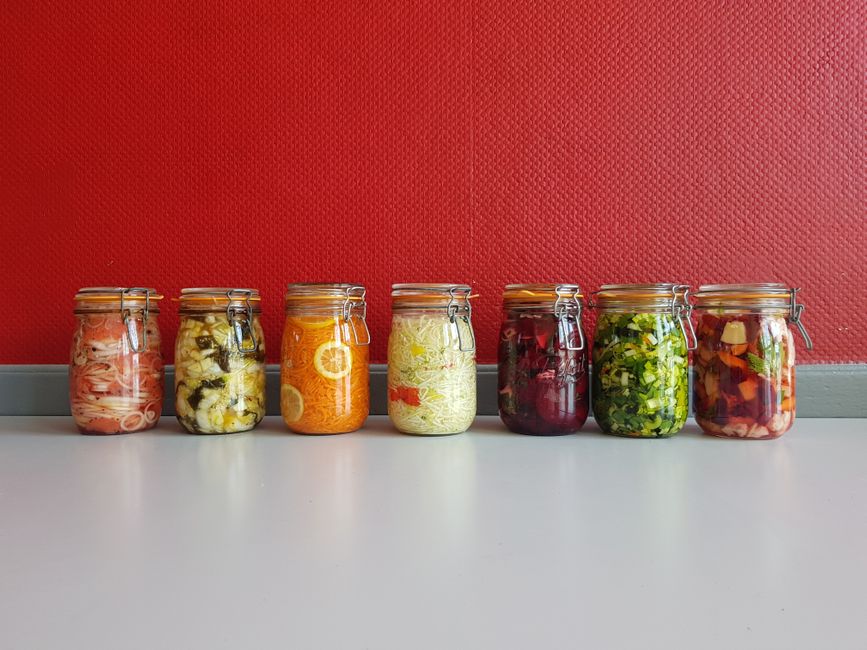
The category spans a wide range. Kefir, kimchi, live-culture yoghurt, water kefir, kombucha, miso, tempeh, and traditionally made pickles all qualify, provided the fermentation process uses live cultures rather than vinegar shortcuts. Not all supermarket pickles count. Pasteurisation kills the bacteria. Label reading matters.
In Portugal, one often-overlooked native fermented food is azeitonas em salmoura — olives brined in salt water rather than vinegar or oil. When made traditionally and unpasteurised, they carry live lactobacillus cultures. The same applies to certain artisan cheeses from the Alentejo and Serra da Estrela regions, many of which undergo natural lacto-fermentation during ageing.
Where to Shop in Lisbon
For residents willing to look beyond the supermarket aisle, the options in Lisbon are genuinely good. Mercado de Campo de Ourique, on Rua Coelho da Rocha in the Estrela parish, hosts several specialist vendors selling unpasteurised dairy products and traditionally cured items. A 250g tub of artisan kefir there runs roughly €3.50 to €4.80 depending on the producer — competitive with mass-market yoghurt once you factor in the live-culture content.
In Príncipe Real, the organic grocer Celeiro — with its well-stocked branch near Jardim do Príncipe Real — carries a rotating selection of kombucha, water kefir drinks, and fermented vegetable products including local sauerkraut variants made by small-batch producers based in the Setúbal peninsula. Kombucha bottles typically retail between €3 and €5 for 330ml. The shop also stocks unpasteurised miso imported from specialist European producers, useful for anyone who has incorporated Japanese-influenced cooking into their routine.
For kimchi and Korean-style fermented vegetables, the cluster of Asian grocery shops along Rua do Benformoso in Mouraria remains the most reliable source in the city. Several carry house-made or small-producer kimchi sold fresh rather than shelf-stabilised, which is the version most likely to retain active cultures.
The Lisbon-based wellness programme Alimentação Consciente, which runs workshops out of Mouraria and Intendente, has included fermented food preparation sessions in its 2026 calendar. The July session on kefir and sourdough fermentation is scheduled for 19 July and costs €25 per person — a practical option for anyone who wants to make these foods at home rather than rely on commercial versions.
Starting a fermented food routine does not require a dramatic dietary overhaul. Nutrition professionals generally suggest introducing one or two servings daily and building gradually, since rapid changes in fibre and bacterial intake can cause temporary digestive discomfort. A live-culture yoghurt with breakfast, a small portion of kimchi alongside a weekday lunch, or a glass of kombucha in the afternoon covers the practical basics without restructuring everything at once. For anyone with existing digestive conditions, checking in with a local gastroenterologist or dietitian before making significant changes remains sensible advice.