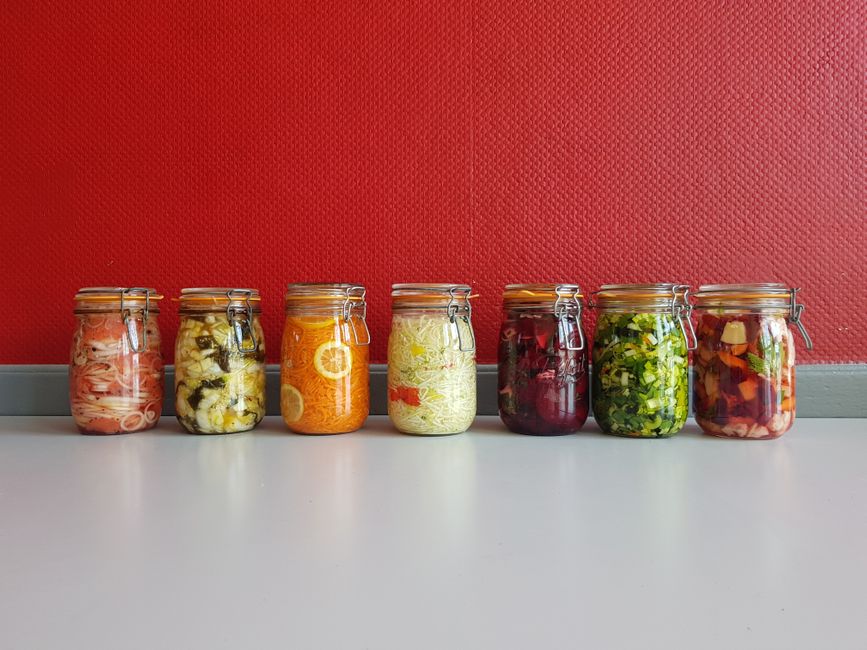
The science on the gut microbiome has moved fast. A 2024 review published in Nature Medicine confirmed that diets rich in fermented foods increase microbiome diversity within as little as ten weeks — and that diversity is now linked to everything from immune function to mood regulation. Lisbon's own wellness culture, already well-established along the Avenida da Liberdade corridor and into Mouraria, is catching up with the research in real time.
Interest in fermented foods is not a passing trend here. It reflects a broader shift in how Lisboetas are thinking about preventive health, driven partly by rising costs in the Portuguese public health system and partly by a generation of nutritionists operating out of clinics in Chiado and Campo de Ourique who are recommending dietary interventions before pharmaceutical ones. The European Food Safety Authority estimates that digestive disorders affect roughly 40 percent of Europeans at any given time — a figure that has nutritionists pointing clients toward the fermented foods aisle with increasing urgency.
What the Market Has to Offer
Start at the Mercado da Ribeira, on Avenida 24 de Julho. The permanent market vendors — distinct from the Time Out Market hall — carry unpasteurised olives brined in traditional salmoura, a salt-water solution that allows natural lacto-fermentation. A kilo runs about €3.50 depending on variety and vendor. These olives are not just a snack; the live bacteria that survive the brining process qualify them as a genuine probiotic food. Look for stalls selling loose olives rather than jarred product, since jarred versions are typically heat-treated and the beneficial cultures are gone.
A short metro ride north, the Mercado de Campo de Ourique on Rua Coelho da Rocha stocks Portuguese-made kefir from two or three small dairy producers. At roughly €2.80 for a 500ml bottle, it is cheaper than most imported kombucha and delivers a comparable range of live cultures. The market also carries unpasteurised queijo fresco from the Alentejo region — technically a fresh fermented cheese, with measurable populations of lactic acid bacteria when consumed promptly after purchase.
For kombucha specifically, the Lisbon-based brand Komvida — which launched its Portuguese distribution push in 2023 — now sits on shelves at Miosótis, an organic grocer on Rua das Flores in Bairro Alto. A 250ml bottle costs around €3.20. Kombucha's evidence base is thinner than that of kefir or live-culture yogurt, but its organic acid content and modest probiotic load make it a reasonable addition to a varied diet. Nutritionists in the city tend to recommend it as a bridge food for people reluctant to start with the sharper taste of fermented dairy.
The Local Fermented Food Most People Overlook
Açorda and caldo verde get all the attention, but Lisbon has its own quietly fermented staple: chouriço made using traditional slow-curing methods. Craft butchers in the Intendente neighbourhood still produce dry-cured sausages using lactic acid fermentation — the same microbial process behind sauerkraut and kimchi. A 200-gram link from Talho do Marquês near Intendente typically costs €4 to €5. It is worth asking explicitly for traditionally cured product; much commercial chouriço skips the fermentation stage entirely in favour of smoke flavouring and chemical preservatives.
Açorda, incidentally, is made with stale bread — which, if the bread was sourdough, means you are adding fermented grain to the bowl. Sourdough bakers have multiplied across Lisbon since 2021; Gleba, based in the LX Factory complex in Alcântara, remains the city's best-known artisan producer and sells its naturally leavened loaves for €5 to €8 depending on size.
The practical advice from nutritionists at clinics including NutriLisboa, which operates out of Avenida António Augusto de Aguiar, is consistent: add one or two fermented foods daily rather than overhauling your diet overnight, and prioritise variety across fermented categories — one dairy source, one vegetable-based source, one grain-based if possible. For personalised guidance on gut symptoms or specific dietary needs, a registered dietitian is the right first call. The Ordem dos Nutricionistas maintains a public directory at ordemdosnutricionistas.pt where Lisbon practitioners can be searched by postcode and specialty.