Portugal's immigration agency, AIMA — the Agency for Integration, Migration and Asylum — recorded more than 1.1 million registered foreign nationals living in Portugal by the end of 2025, a figure that represents roughly 10.5 percent of the entire national population. The bulk of them, somewhere between 280,000 and 300,000, are concentrated in Greater Lisbon. That ratio has roughly doubled since 2016, and city hall planners, parish councils and community health centres are scrambling to keep up.
The timing is not incidental. Europe is reckoning with migration in real time: Poland's government warned this week that the security environment demands harder choices on borders; France just buried more than 2,000 people lost to a single summer heatwave that hit migrant workers in outer suburbs disproportionately hard. In Lisbon, the pressure is quieter but no less concrete. The Montenegro government's reform of the Golden Visa programme, which closed the residential property route in 2023 but kept investment-fund pathways open, has done little to slow the arrival of high-earning expats from Brazil, the United Kingdom, the United States and increasingly India. Demand for housing is ferocious. Working-class Portuguese families, and the longer-settled migrant communities who arrived decades before the tech boom, are caught in the middle.
The Streets Where the Change Is Most Visible
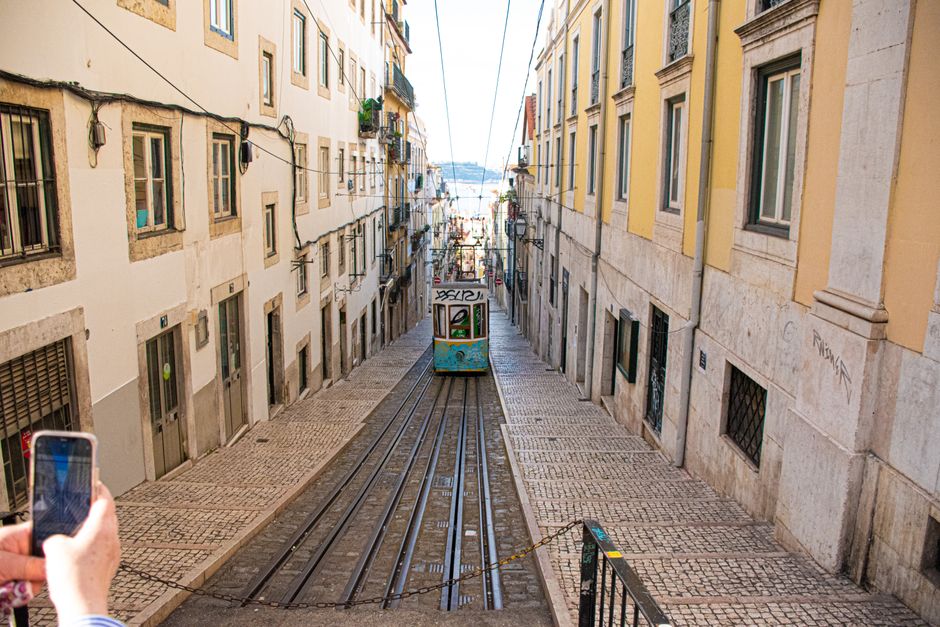
Walk along Rua do Benformoso in Mouraria on any weekday morning and the evidence is sensory: signage in Bengali, Hindi, Tigrinya and Mandarin sits alongside older tile facades; the Comunidade Islâmica de Lisboa, whose mosque on Avenida José Malhoa serves roughly 50,000 worshippers across the city, has reported a 30 percent jump in social-service requests since January 2025. The Centro de Apoio ao Imigrante, run by Caritas Portuguesa out of offices near Intendente, processed 11,400 individual cases last year, a record for the organisation.
Marvila tells a different story. The eastern riverside parish, once defined by warehouses and a strong working-class Portuguese identity, has become a landing pad for Brazilian families — the largest single foreign-national group in the country — and a parallel wave of digital nomads from northern Europe who pay market rents that local renters cannot match. A two-bedroom flat on Rua Capitão Leitão, which averaged €750 per month in 2019, now lists for €1,450 or more. Parish social workers at the Junta de Freguesia de Marvila say emergency housing requests from families — Portuguese and foreign-born alike — climbed 22 percent in the first quarter of 2026 compared with the same period in 2025.
The public school system is absorbing the largest single shock. The Agrupamento de Escolas de São Vicente, which covers several primary schools in the Alfama and Mouraria belt, reported 47 different mother-tongue languages among its 2,300 enrolled pupils last academic year. The school receives supplementary funding through the Ministry of Education's PLNM programme — Portuguese as a Non-Mother Tongue — but teachers' union representatives say the allocations have not kept pace with enrolment growth since 2023.
What Local Residents Are Actually Asking For
The debate in Lisbon is not primarily about whether migrants should come. Most community surveys, including a Câmara Municipal de Lisboa study published in March 2026, show majority support for managed immigration among city residents. The friction is about services, specifically whether health centres, schools and affordable housing can be funded fast enough to serve a population growing at this pace.
The Centro de Saúde de Penha de França, one of the busiest primary-care units on the eastern side of the city, has operated above its registered-patient capacity since mid-2024. Staff there are working under protocols set by the Administração Regional de Saúde de Lisboa e Vale do Tejo to triage unregistered patients, but waiting times for non-emergency appointments have stretched to eleven weeks.
For residents trying to navigate the system now, AIMA operates a walk-in appointment service at its Lisbon hub on Avenida António Augusto de Aguiar, though online slot availability has been erratic through June. Caritas Portuguesa and the Conselho Português para os Refugiados both maintain weekly advice sessions in multiple languages. The city council's Programa Lisboa Acolhe offers subsidised Portuguese-language classes at seven locations, including a site in Olaias that opened in February 2026. None of these are perfect solutions. They are, for the moment, what exists.