Business
Global Crises Reshape Lisbon Business in 2026
Rising insurance costs and refugee-driven property demand show how European instability is reshaping the Portuguese capital's economy.
4 min read
Updated 5 h ago
Business
Rising insurance costs and refugee-driven property demand show how European instability is reshaping the Portuguese capital's economy.
4 min read
Updated 5 h ago
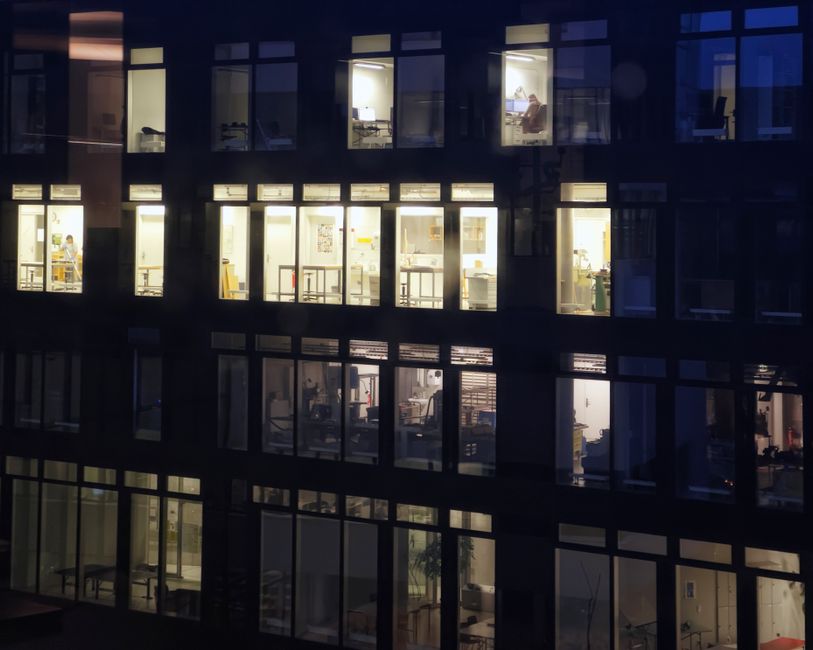
Lisbon's commercial property market posted its strongest first-half occupancy figures in three years even as the global backdrop turned decisively darker — and local economists and estate agents say those two facts are directly connected. As of July 2026, average office rents in the Parque das Nações district have climbed to €22 per square metre per month, up roughly 11 percent on the same period in 2025, driven in part by a fresh wave of corporate relocations from less stable corners of Europe.
The timing matters. Across the continent, businesses are quietly repricing risk. France registered more than 2,000 excess deaths during last month's heatwave, straining insurers and nudging European multinationals to look harder at where they put their people and their capital. Meanwhile, the security situation stretching from Ukraine to Monaco has pushed certain categories of high-net-worth individuals and their advisers toward cities perceived as calm, well-governed and sun-drenched — a description Lisbon has aggressively marketed to foreign investors since the launch of the Startup Lisboa programme over a decade ago.
The beneficiaries inside Lisbon are concentrated but visible. Chiado and the Príncipe Real neighbourhood have both seen luxury residential inquiries from Eastern European buyers jump sharply since the spring, according to the Portuguese Real Estate Professionals Association, APEMIP, which tracks quarterly buyer-origin data. Several boutique legal firms on Rua do Século that specialise in Golden Visa successor schemes — specifically the residency-by-investment routes that survived the 2023 reforms — report full appointment books through September.
At the enterprise end of the market, co-working provider Second Home, whose Mercado de Ribeira location remains one of the most internationally visible office spaces in the city, says demand from French and German startups accounts for close to 30 percent of new memberships signed in the second quarter of 2026. The German debate over requiring sick notes from the first day of illness has sharpened conversations in Berlin boardrooms about flexibility and labour costs — and Lisbon, where average tech-sector salaries run between €28,000 and €42,000 annually against a cost base still well below Frankfurt or Paris, keeps appearing in those conversations.
Energy exposure is a more complicated story. Portugal imports roughly 80 percent of its natural gas needs, and the long queues at Russian petrol stations — a sign of deepening fuel stress inside Russia as the war grinds on — are rippling through European wholesale energy markets. Portuguese grid operator REN flagged in its June bulletin that summer industrial electricity prices are tracking 14 percent above the five-year seasonal average. For the cluster of data-centre operators that have set up along the A8 corridor north of Lisbon, targeting the country's Atlantic cable landing infrastructure, that is a material cost pressure arriving at an inconvenient moment.
The second half of 2026 brings several pressure points that Lisbon-based firms cannot ignore. The funeral of Iran's supreme leader and the subsequent uncertainty over Tehran's posture affects oil shipping insurance through the Strait of Hormuz — a route whose disruption eventually touches the fuel costs of every haulage and logistics company operating out of Alverca or Bobadela. Supply chain managers at companies relying on Asian manufactured inputs should be reviewing their contracts with freight forwarders before August.
Domestically, the Agência para o Investimento e Comércio Externo de Portugal, AICEP, has scheduled a series of investor roadshows for September targeting the Gulf states — markets where Portuguese food exports, particularly wines from the Douro and Alentejo and preserved fish from Matosinhos, have been gaining shelf space. Firms wanting access to those delegations should register with AICEP's Lisbon office on Avenida 5 de Outubro before the end of July.
The immediate practical advice from trade bodies is straightforward: lock in energy contracts where possible before autumn, take seriously the uptick in commercial property values before signing long leases at current peak rates, and treat the international instability not only as a risk but as a recruitment and relocation opportunity. Lisbon has absorbed disruption before and turned it into commercial advantage. The conditions to do so again are present — provided businesses move before the window closes.
Business

Business

Business

Business
About this article
Published by The Daily Lisbon
Spread the word
Daily brief
Free, in your inbox before 7am. Weekdays.
The Daily Network — local news across Australia